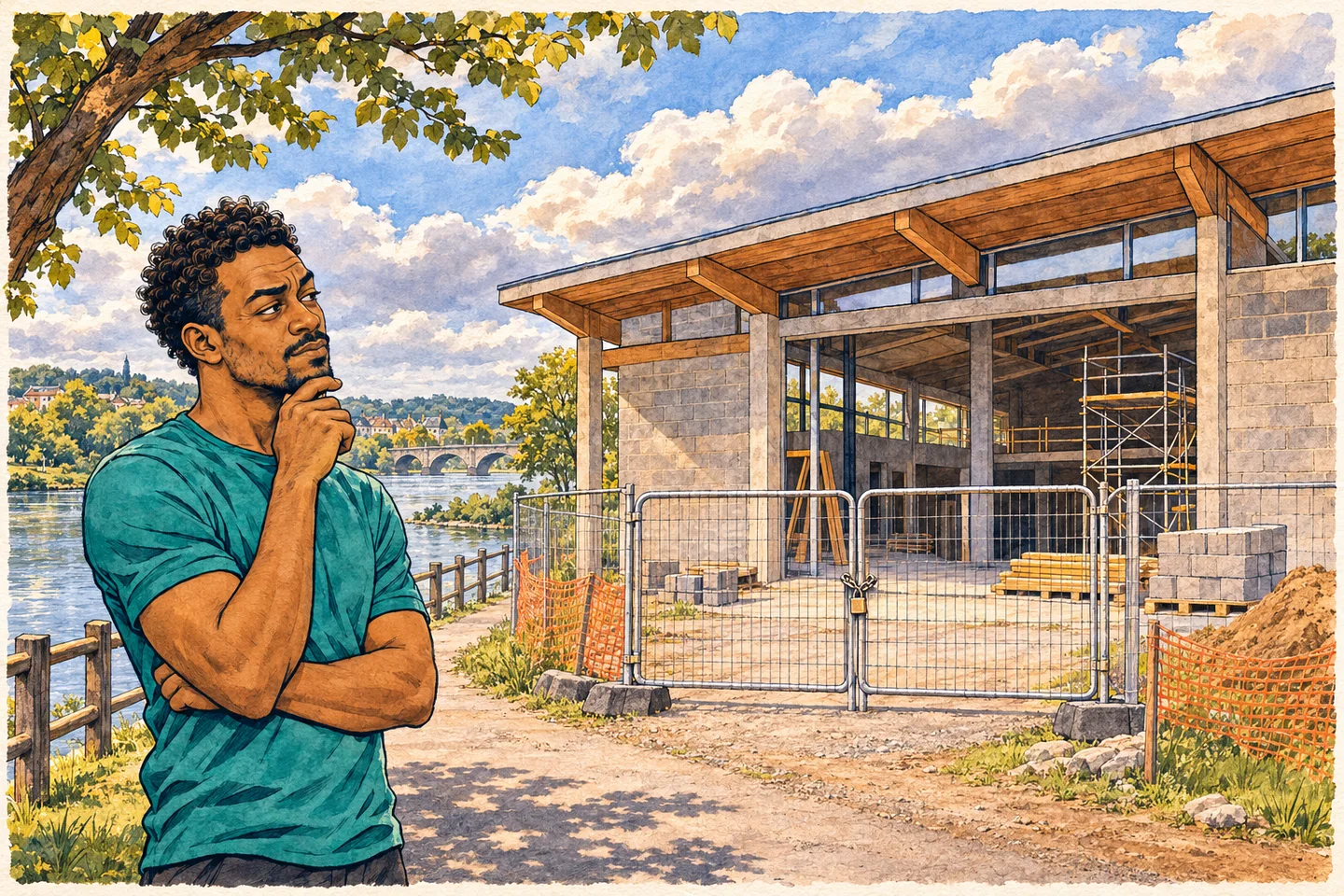
When the council approved the riverside centre, it announced that the building would open the following spring. Contractors were to complete the interior by February, and local groups were already arranging events. Miles remembers how readily an intention became an expectation: residents spoke of what the centre would offer as though its timetable were beyond question.
By January, supply delays had made that timetable untenable. The organisers were going to announce a revised date, but a further inspection revealed problems with the heating. A public preview was about to go ahead when the safety adviser recommended postponing it. None of these setbacks had been part of the original promise, yet each altered what could reasonably be promised next.
The centre is now due to open in June. By then, several groups will have been waiting for more than a year, and the programme will have changed substantially. Miles remains hopeful, but he distinguishes a scheduled date from a guarantee. The next announcement, he argues, should explain what still has to happen, rather than presenting the future as a fact that has merely been delayed.
Words to take with you
untenable
insustentável
setbacks
contratempos
due to open
com abertura prevista
Notice the English: Would open reports a future viewed from the past. Were going to signals an intention; was about to marks imminence. Is due to describes a current schedule.
Reading comprehension
Choose one answer per question. The explanation helps you find the evidence in the text.Escolha uma resposta por pergunta. A justificativa ajuda você a voltar ao trecho certo.
0 / 3 answered
Use the grammar from this story.
Future Time, Seen from Present and Past
/practiceThe explanation and exercise are together on the next page.A explicação e o exercício deste tópico estão juntos na próxima página.