
C2 · UNIT 1
Let’s make it clear.
Organise foreground events, background activity and earlier causes in a narrative.
01 · THE IDEA
What are you trying to say?
Narrative time is organised relative to changing reference points. Past simple moves the story forward; past perfect reaches back before a past point; past perfect continuous presents an earlier activity as a process or background.
Reconstruct how an unfinished draft became an apparently mysterious letter. Edit passages from Brett’s account, Emi’s recollections and the older notebooks without changing their chronology.
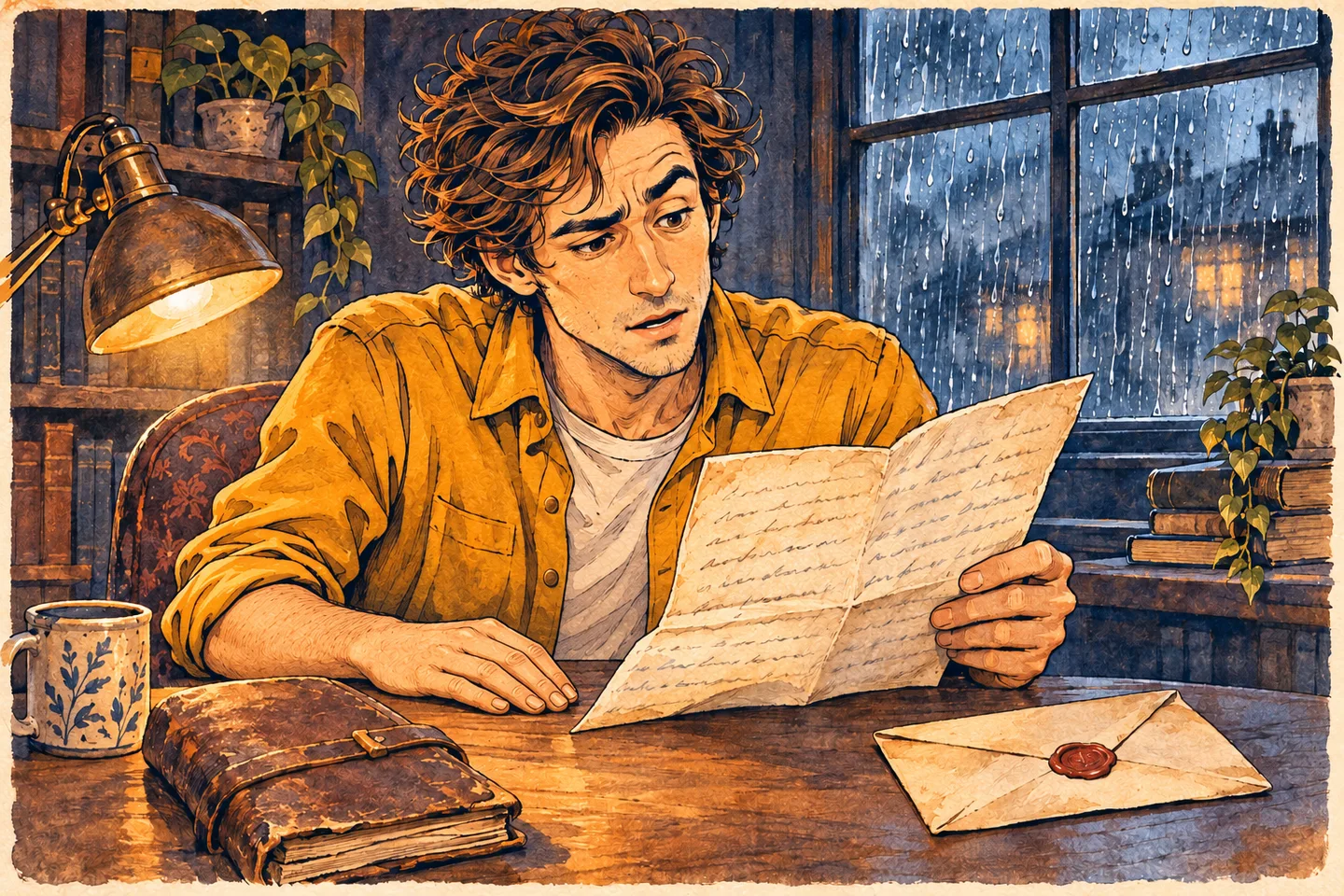
SEE IT IN A SENTENCEBrett opened an envelope containing words he had read ten years earlier. Emi had been sorting notebooks when she found the draft.
02 · BUILD IT
Keep the pattern handy.
| Use | Pattern | Example |
|---|---|---|
| Main events | past simple | Emi opened the envelope. |
| Background in progress | was/were + -ing | Brett was waiting. |
| Earlier completed event | had + participle | She had received it earlier. |
| Earlier process | had been + -ing | They had been waiting for hours. |
03 · EXAMPLES & MEANING
Small changes. Different messages.
Give the reader a reference point
Past simple normally advances a narrative. Past continuous places an activity in progress around a past point. Past perfect establishes an earlier event relative to that point. The continuous perfect foregrounds an earlier process or its duration, often explaining a later state.
When she arrived, they had been waiting for an hour.
When she arrived, they waited for an hour.
Aspect is a choice of presentation
A continuous form does not simply mean long, and a simple form does not simply mean short. They package an event differently. Once an earlier time layer is established, avoid unnecessary past perfect if the sequence remains clear. Keep time markers consistent when the viewpoint shifts.
She was opening the letter when the phone rang.
She opened the letter and read it.
A few more useful details
- Distinguish event order from telling order: the account may reveal an earlier cause after its later effect.
- Before, after and by the time make temporal relationships explicit; past perfect reinforces an earlier-than-past relationship where useful.
- An ongoing background activity can be interrupted by a bounded event: had been sorting … when she came across the piece.
- A later report can introduce a flashback: She later explained that she had copied the paragraph. After the temporal frame is established, simple past may continue the sequence.
04 · COMMON MISTAKES
A small fix makes the difference.
Instead ofShe had been knew him for years.
Try thisShe had known him for years.
Know normally uses a simple perfect form.
Instead ofWhen I arrived, he left. [intended: already gone]
Try thisWhen I arrived, he had left.
Past perfect makes the earlier departure explicit.
GRAMMAR IN CONTEXT
Inside “The letter that arrived twice”
Had read establishes an earlier event relative to opened. Had been sorting sets background before came across; later explained shifts the narrative viewpoint.
Read the story and notice the patternTAKE IT WITH YOU
Now make it your English.
Choose an example above. Change the people, place or situation to make a sentence about your own life. Read it aloud, then check the pattern again.