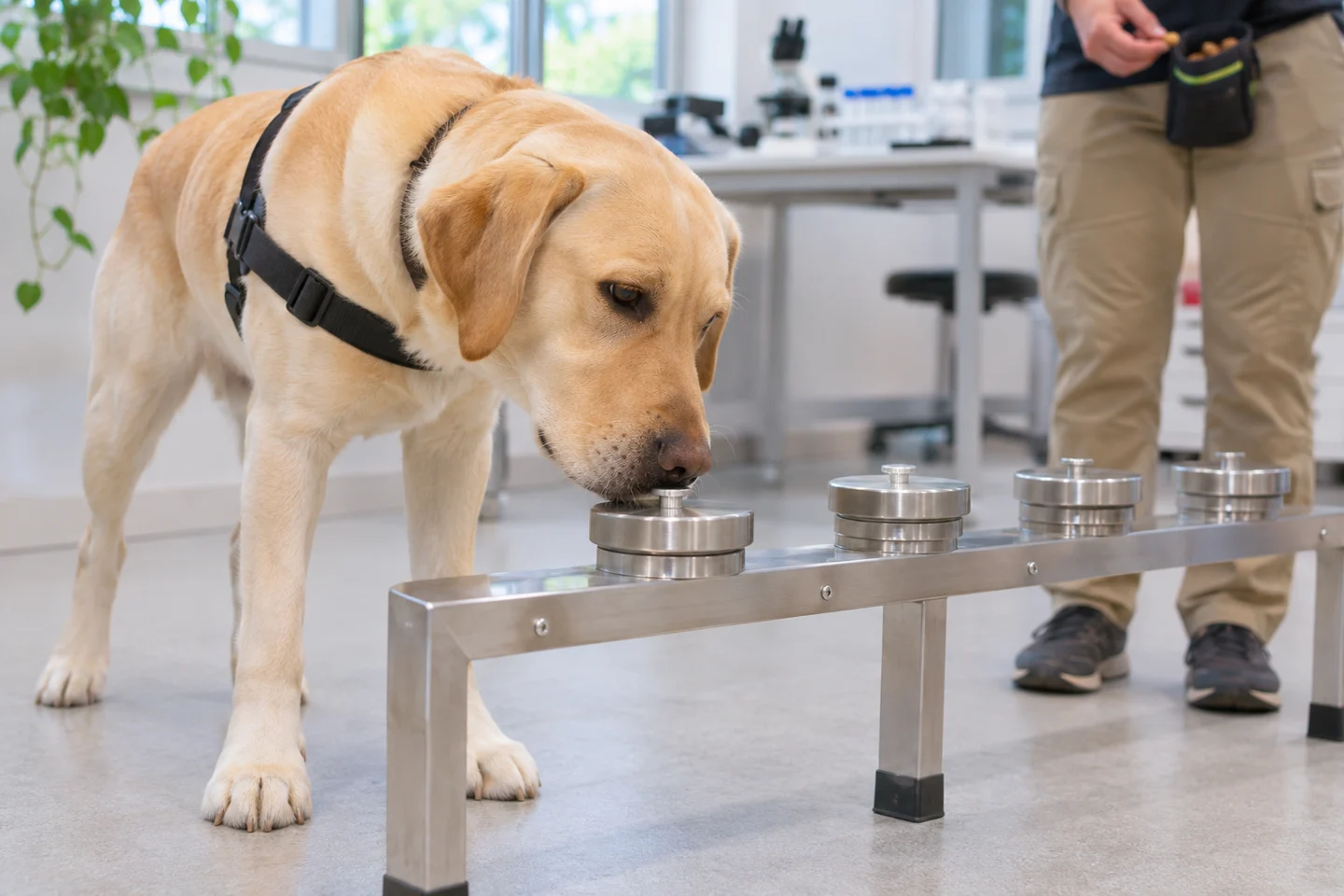
A nose at work
A dog’s nose gives it access to information we may not notice. Researchers have investigated whether specially trained dogs can recognise odours associated with some cancers in human samples. These may include urine or breath samples, depending on the study.
The idea is not that a dog reads a medical report. Disease can be associated with changes in the chemicals released by the body. Researchers ask whether dogs can learn a useful scent pattern and identify it in samples they have not encountered before.
Training is only the beginning
In scent-detection training, a dog learns to give a signal when it finds a target odour. A signal might be sitting beside a sample. A reward helps make the task worth repeating. The animal’s welfare matters throughout the work.
But recognising training samples is not enough. A good test must check unfamiliar samples and avoid clues from the people present. If a handler knows the answer, an accidental movement might influence the dog. Researchers need to separate scent detection from other possible explanations.
Promising does not mean certain
Studies have reported encouraging results, but performance varies across research methods and cancer types. A result from one small study does not show that all dogs can identify all cancers in ordinary life.
Medical Detection Dogs describes this work as ongoing research. Its research samples are anonymised, and it does not give individual donors a diagnosis based on the dogs’ responses. An ordinary pet’s sniffing is not a medical test and cannot confirm or rule out cancer.
The exciting question is what researchers can learn from the dogs’ abilities. In English, compare “can recognise a trained scent” with “can diagnose a person”. Those sentences make very different claims. Careful words help us keep a fascinating story accurate.