A defence you cannot see
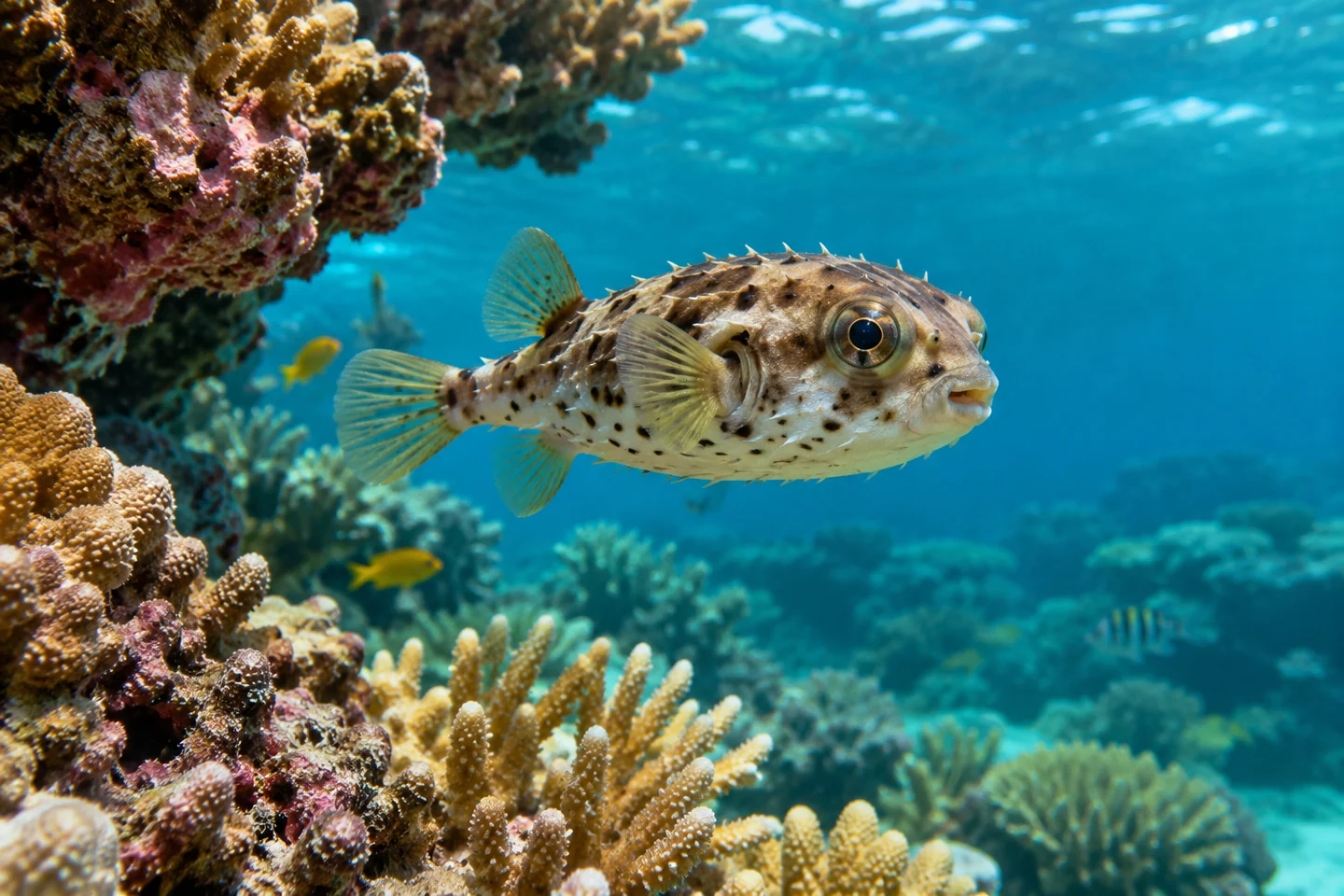
A pufferfish can make itself much larger by taking in water. That can make it harder for a predator to swallow. But many pufferfish have another defence: a powerful substance called tetrodotoxin, or TTX.
TTX is a toxin: a poison made by a living organism. In many pufferfish, it builds up through the food chain. The amount and location of the toxin vary between species. A fish’s appearance cannot tell you that it is safe to handle or eat.
Poisonous or venomous?
In English, an animal is venomous when it delivers a toxin into another animal, for example through a bite or a sting. A poisonous animal can harm another animal when the toxin enters its body in another way, such as being swallowed.
The pufferfish does not inject TTX through its spines. It carries the toxin as a defence. That is why we call it poisonous rather than venomous. The important difference is how the toxin is delivered.
Why is the fish resistant?
Normally, TTX blocks tiny structures called sodium channels. These help nerves send signals. When the channels are blocked, important messages cannot travel normally through the body.
Researchers have found genetic changes in pufferfish sodium channels that make them resistant to TTX. The toxin does not affect those channels in the usual way. Resistance varies, so “resistant to the toxin” is more useful here than saying the fish is completely immune to every poison.
Now look at the title again. “Itself” tells us that the fish is both the subject and the possible target of the action. One unusual animal gives us a reason to use a very useful English word.