An earthy arrival
After a dry spell, the first drops of rain can bring a smell that seems to arrive before the landscape has changed. We call this earthy scent petrichor. Rain provides the occasion, but the ground supplies much of what you smell.
Compounds associated with plants and soil bacteria contribute to the scent. One of them is geosmin, a substance produced by certain microorganisms. These materials are already present before the shower begins. The interesting question is how they get from the surface into the air.
A very small burst
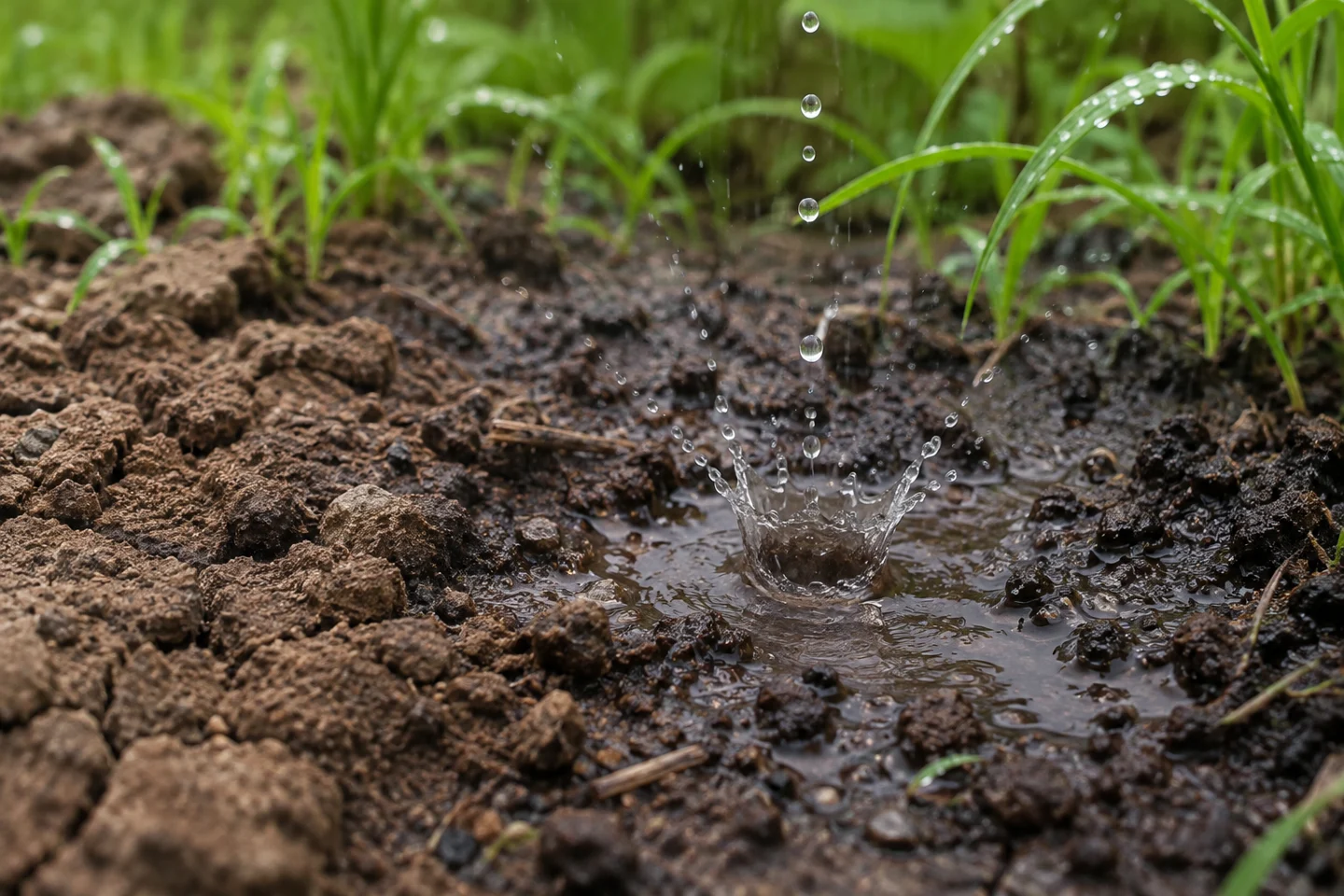
In laboratory experiments, MIT researchers filmed raindrops hitting porous surfaces. On impact, a drop could trap tiny bubbles underneath it. The bubbles rose through the water and burst, releasing much smaller droplets into the air.
These airborne droplets are aerosols. They can carry material from the surface on which the rain has landed. The researchers proposed that this mechanism helps explain how the familiar smell reaches us. It is a transport story as well as a chemistry story.
The experiments also challenged an easy assumption: harder rain does not necessarily produce more aerosols. Under the tested conditions, light and moderate rain could release more than heavy rain. The speed of the drop and the properties of the surface mattered.
Notice the strength of a claim
There is a useful language lesson here. “The researchers observed” introduces something recorded in an experiment. “The mechanism may explain” introduces an interpretation. Both matter, but they make different claims.
When you describe an explanation, choose your verbs carefully. Compare “This proves the cause” with “This helps explain the process.” The second leaves room for other contributing factors. A precise sentence can be less dramatic and more informative at the same time.